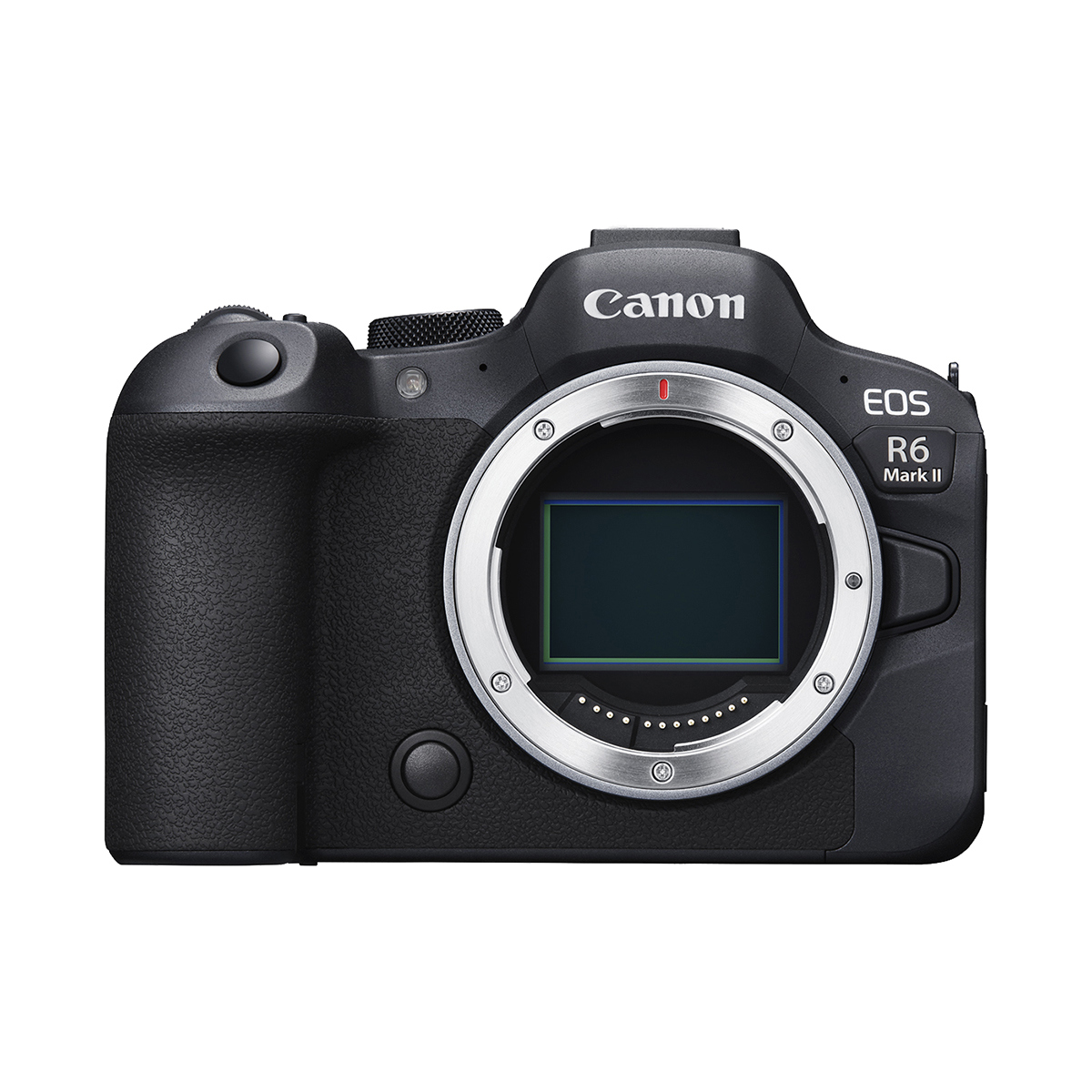
Quick take: The R6 Mark II combines the image quality, high ISO performance, and handling I want for wedding work. Here is what I like, the autofocus setup I use, and the controls that still frustrate me.
What I learned after 22,000 frames
This review follows about 22,000 frames with the R6 Mark II and roughly 400,000 with my original R6 bodies. For weddings, families, and portraits, I value its handling and autofocus more than a larger pixel count. I also prefer working with two matching bodies so I do not have to think about different controls during the day.
Keeping control of autofocus
My main adjustment was setting automatic subject detection to None for general work, then assigning eye autofocus to AF-ON. That let me focus on a ring, hand, or flower without the camera pulling attention back to a face. When I am photographing people moving, I can switch people detection back on.
The video includes my daughter running and playing, tested with fast lenses including an adapted Sigma 105mm f/1.4, Canon EF 35mm f/1.4 II, and RF 50mm f/1.2. It shows both the tracking behavior and the resulting photographs, rather than relying only on the focus box.
Handling details that matter during a wedding
The relocated power switch makes one-handed operation easier for me. When using the R6 Mark II alongside an R5, I taped over the stills/video switch while adjusting to the new layout. I also taped the mode dial because I shoot manually and did not want it changing accidentally. The multifunction lock does not lock that mode dial.
In my startup comparison, the R6 Mark II displayed its focus point sooner. The R5 could already take a photograph before its indicator appeared, so this is a difference in shooting feedback, not simply a claim that the R5 cannot shoot during startup.
In this review, I am going to talk about the camera's Image Quality, High ISO capabilities, autofocus speeds, and handling. I'll also tell you why I think that the Canon R6 II is currently the best Canon Camera option for Wedding photographers.
I have been photographing weddings since 2007 and I started with the original Canon 5D which replaced my starter kit of the Canon 30D. Cameras have advanced so much from autofocus to High ISO and everything in between. It's amazing what the Canon R6 II is capable of when you compare it to the original 6D or 5D.
Image Quality
As far as image quality goes, the R6 II is perfect. 24 megapixels is plenty of resolution for weddings and most photography. These files edit wonderfully and the dynamic range is more than I could ask for. For a more in-depth Image Quality review head over to my R6II vs R5 comparison HERE, where I show how the R6 II holds up against the Canon R5 when printed.
In my opinion, which is very subjective, the colors out of the Canon R6 II are my favorite Canon colors so far. Fuji will always be my first love when it comes to color, but the R6 II is definitely number two. I use the Neutral profile in Lightroom to achieve my favorite color tones. It's not just the colors but the way the files handle the tone curve, contrast, and natural dynamic range that make me choose this camera over any Sony camera. Sony cameras are phenomenal and usually leading in features, but they just don't have any good profiles and I don't like the way they edit.
High ISO
The high ISO capabilities of this camera accompanied by lower aperture lenses allows you to photograph any scene. I feel comfortable delivering images at 10,000 ISO with no issues.
For a more in-depth review high ISO review head over to my R6II vs R5 comparison HERE.
autofocus System and Speed.
The Canon R6 II autofocus system is insanely fast and accurate. I can't tell a difference between the R6 II autofocus and the Canon R3. The only problem I have faced is that it's too jumpy and unpredictable when you have subject detection turned on. I found that turning off subject detection and setting a button to Eye autofocus, gives me more control of what I am focusing on. I did turn the subject detection back on when photographing my daughter playing soccer and riding her bike and it worked perfectly for those applications.
Handling
First of all, this camera turns on so fast! This may not affect everyone but in order to save battery life and avoid changing settings I turn my camera on and off multiple times all day. This is just something that is necessary with EVFs (electronic viewfinders) and Screens draining batteries more quickly these days. Gone are the days when the SLR would last all day long no problem.
I have larger hands and this camera fits my hand great with no pinky grip needed. The buttons are all in natural places and I like that my thumb rests on the small joystick.
The new joystick is convex vs concave and feels a bit different, but this hasn't caused me any problems or annoyances yet.
The fact that Canon moved the power button to the right side is a huge win for me. Although I am still training my brain on this switch. Now I can turn the camera on with one hand, just like every other camera.
One big advantage that the R6 II has over the R3 (other than price) is the smaller size. The Canon R3 was wonderful for photographing weddings, but when yielding two cameras the size really got to me.
I do wish that they had put a locking dial on the PASM dial. This is something that I accidentally change all the time when pulling my second camera out of my bag with my left hand. Maybe it's just me but it happens enough that I just put tape over the dial and that's a good enough fix for me. I did the exact same thing with the first R6.
The EVF and flip screen is great. They are not the highest resolution but I find them to be sufficient. One big noticeable difference between Fuji and Sony is that they are very bright screens.
Conclusion
I think that this is the best current Canon option for wedding photographers when you add up all the features that it offers at such a great price. Check the price here👇