Gear Reviews
Hands-on camera, lens, iPhone accessory, lighting, and editing software reviews by Ely Roberts. Browse the latest reviews below, or use the Reviews menu to explore a category.

Canon RF 16-28mm and 28-70mm F2.8 STM Review
I replaced my RF 24-70mm F2.8 with the smaller RF 16-28mm and 28-70mm F2.8 STM lenses, mainly for video.
I replaced my RF 24-70mm F2.8 with the smaller RF 16-28mm and 28-70mm F2.8 STM lenses, mainly for video. After using them for personal photography and paid work, I was very happy with the size, weight, and results.
Originally published on YouTube Feb 27, 2026.
Why these two zooms fit my kit
The wide zoom works well for a camera facing me, while the 28-70mm is useful for tighter and overhead video. Together they cover much of my studio YouTube work without making the rig heavy. For still photographs, I still use my RF 28-70mm F2 when I want that lens’s particular look.
Small handling details
Both lenses need to be rotated out of their retracted position before shooting. They also look similar enough that I use physical identifiers to tell them apart in a bag. Filters and a grippy step-up ring are part of my video setup.
Image quality in practical use
I found the results satisfactory for the way I work. My discussion of distortion concerns the corrected view and normal editing workflow, rather than uncorrected optical performance. This is a practical opinion after using the lenses, not a laboratory comparison.
Who I would recommend them to
They make sense to me for a lighter Canon hybrid kit, especially when video and travel matter. I liked the balance enough to move away from the larger standard zoom, while keeping other lenses for jobs that need a different look.
Watch on YouTube and view the original product links. Some shopping links in the original description may be affiliate links.

Canon RF 45mm F1.2 Review: Affordable Speed with Trade-offs
After about a month with the Canon RF 45mm F1.2, I found it a fun, lightweight way to get a very wide aperture.
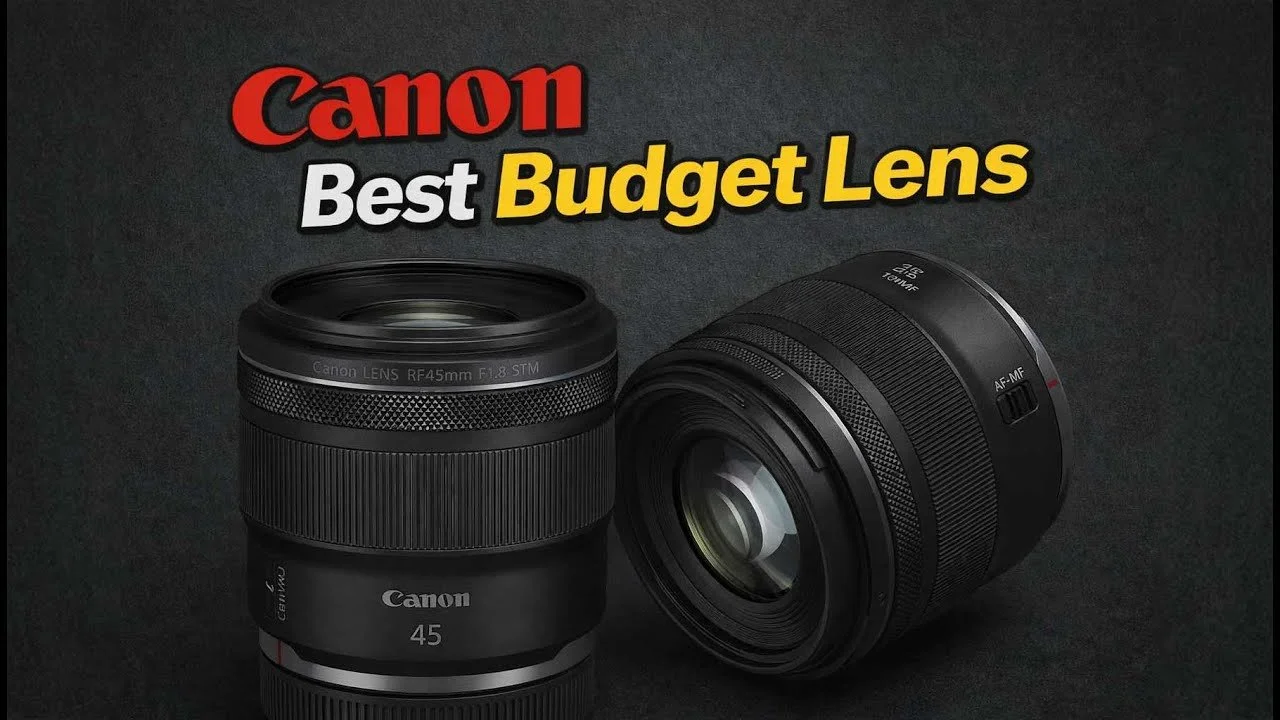
After about a month with the Canon RF 45mm F1.2, I found it a fun, lightweight way to get a very wide aperture. I compared it with lenses I already owned, including the RF 50mm F1.2, 50mm F1.4 VCM, and 28-70mm F2.
Originally published on YouTube Jan 25, 2026.
Size and price are the appeal
The compact size and lower price make this lens interesting beside Canon’s larger, more expensive options. My test includes portraits, everyday photographs, and side-by-side examples intended to help you judge the look for yourself.
The compromises I noticed
Autofocus felt slower than my 50mm F1.2 and much slower than the 50mm F1.4 VCM. Some photographs showed strong flare, chromatic aberration, and busier background blur. I still found many of the portrait results perfectly usable for my needs.
Who it makes sense for
For static subjects and portraits, the slower focusing may matter less than it does for children running toward the camera. I probably would not keep it because I already owned alternatives that filled the same role. That does not make it a poor choice for someone building a different kit.
Use the examples to decide
The video includes sample-image comparisons and an autofocus demonstration. Download the linked examples if available and judge the rendering at your intended output size; my preferences are not a substitute for your own priorities.
Original samples or settings: Download here.
Watch on YouTube and view the original product links. Some shopping links in the original description may be affiliate links.

Canon RF 50mm and 85mm F1.4 VCM Review: Are They Worth It?
My Canon VCM lens comparison looks at the RF 50mm and 85mm F1.4 lenses alongside the F1.2 primes, Samyang 85mm F1.4, and my 28–70mm F2 workhorse.
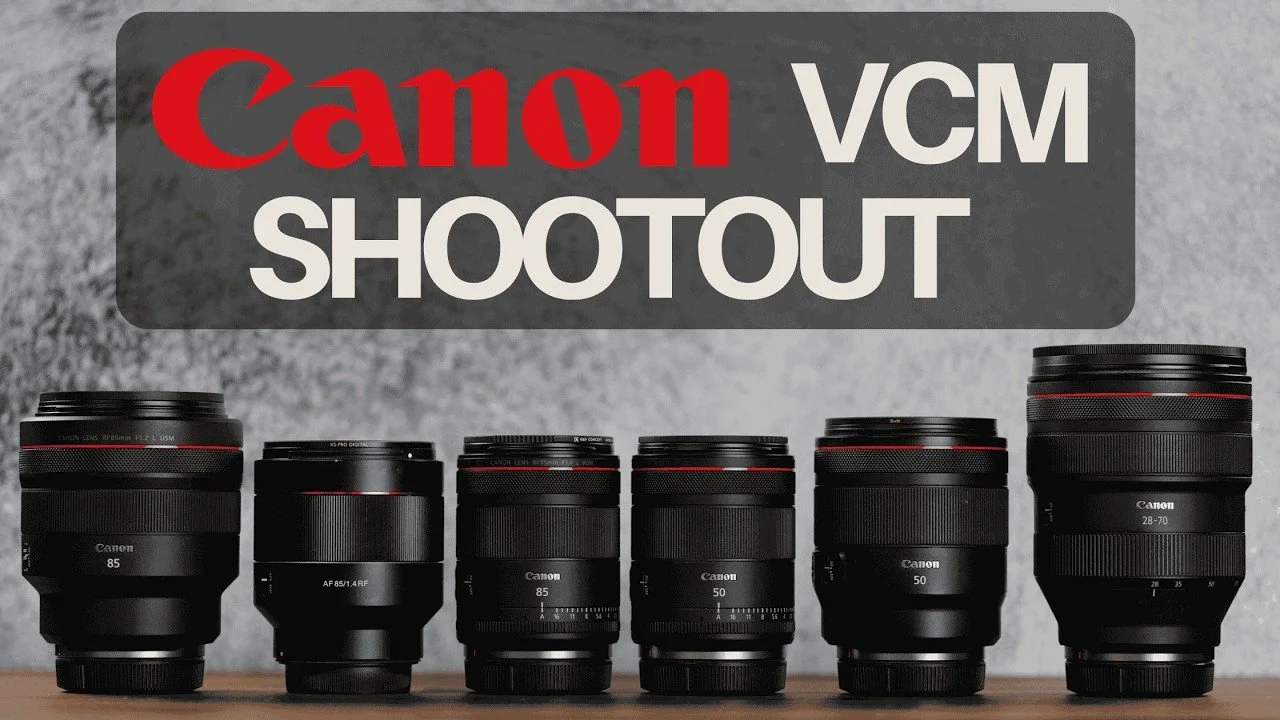
My Canon VCM lens comparison looks at the RF 50mm and 85mm F1.4 lenses alongside the F1.2 primes, Samyang 85mm F1.4, and my 28–70mm F2 workhorse.
Originally published on YouTube Nov 8, 2025.
My pick: the 85mm F1.4 VCM
The 85mm F1.4 VCM stood out for its smaller size, lighter weight, and fast autofocus. For the way I photograph people, handling and consistent results matter as much as the widest possible aperture. The F1.2 still has its own rendering, so this is a practical trade-off rather than a universal winner.
50mm character versus convenience
The 50mm F1.4 VCM impressed me with its speed, color, and usability. I still see a different character in the 50mm F1.2. The video compares real photographs and a field session in Boise, including flare, focus, and background rendering.
Compare the files yourself
The original sample files are linked below. Look at the portraits and the way each lens handles light, then weigh those differences against the size and speed you want in your own kit.
Original samples or settings: Download here.
Watch on YouTube and view the original product links. Some shopping links in the original description may be affiliate links.

Canon RF 100mm F2.8 Macro Review: Portraits and Close-Up Details
The Canon RF 100mm macro earned a place in my kit for product details, ring photographs, portraits, and headshots.
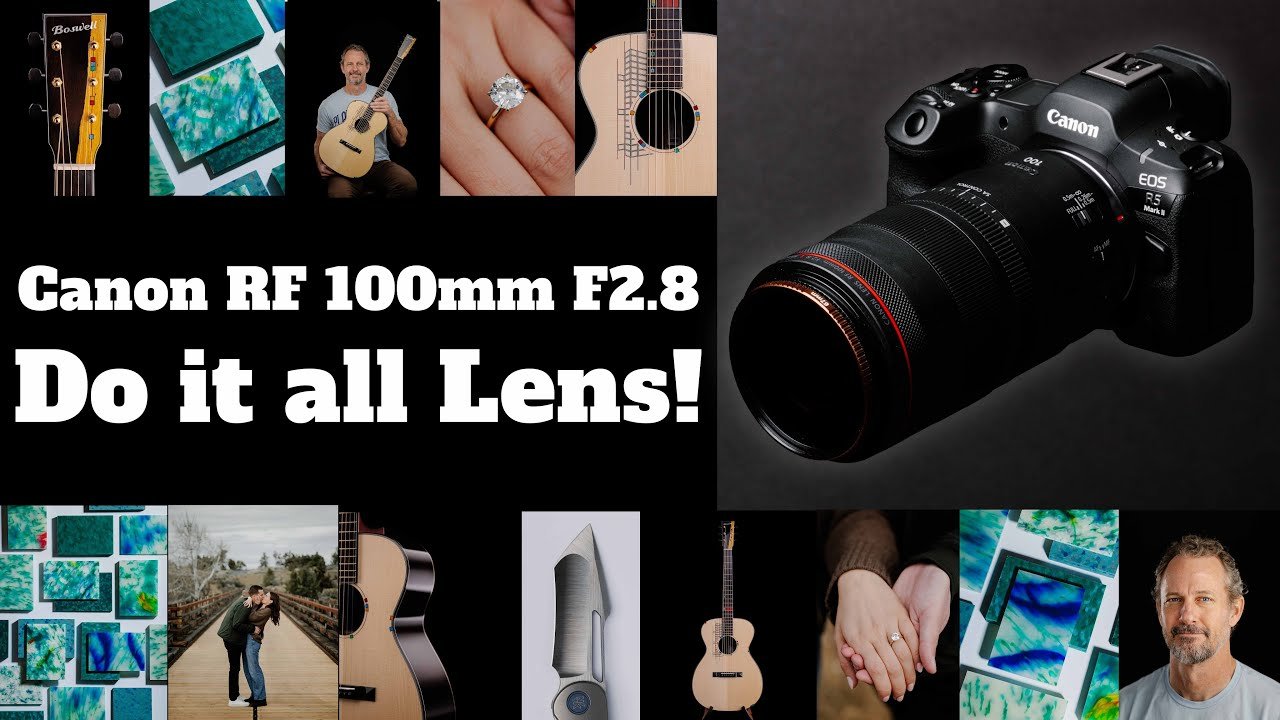
The Canon RF 100mm macro earned a place in my kit for product details, ring photographs, portraits, and headshots.
Originally published on YouTube Mar 12, 2025.
Why I added a macro lens
Borrowing the EF version reminded me how useful a dedicated macro lens can be. I then bought a used RF version and began using it for detailed product work and people. This video records my early experience after about two weeks.
More than close-up photographs
I show examples from portraits, a proposal, and product photography. The 100mm focal length works for people as well as small details, which makes the lens useful beyond occasional ring photographs.
Controls and handling
I cover the focus limiter, stabilization, control ring, and spherical-aberration control. I also discuss using a circular polarizer for reflections. My emphasis is on the photographs and how the lens fits into a working kit.
Watch on YouTube and view the original product links. Some shopping links in the original description may be affiliate links.

Canon EF 35mm F1.4 II on Fujifilm GFX 100S: Austin Photo Review
Canon EF 35mm F1.4 II sample photos on the Fujifilm GFX 100S with a Fringer adapter, including my Austin trip in a 65:24 panoramic crop.

Here are some sample images from the GFX 100s taken with the Canon 35mm f1.4 II using the Fringer GFX-EF Adapter. I photographed most of our trip to Austin in a 65x24 crop. This was a super fun aspect ratio. It pushed me to be more creative and the wider lens and shallow depth of field allowed me to capture scenes pretty much anywhere.
Sample Images: Download here
We started our trip at 4 am only to find that our 7 am flight was delayed until 1 pm. So here are a bunch of pictures of us wandering around a tiny airport with nothing to do.😂


 We finally caught a flight to Denver where we took advantage of our priority pass for free food and drinks.


After a super long day of traveling, we arrived at the South Congress hotel where we received a really nice upgrade to a huge suite. It pays to use hotels.com's rewards program. 


We grabbed some late-night pizza at Home Slice and then finally got some sleep. This place is pretty darn good.


 On our first full day in Austin we attempted to walk into every retail store on South Congresss. Was fun day.


 We discovered Joann's Fine Foods on the first day and ate almost half of our meals there. It was just too good.


Fringer EF-GFX Adapter Review: Canon and Sigma Lenses on GFX
Fringer EF-GFX adapter review on the GFX 100S, with Canon and Sigma lens tests, video comparisons, sample downloads, autofocus, and vignetting notes.
Quick take: Adapting full-frame lenses to the GFX system gives me more creative options, but coverage varies by lens. The longer Sigma primes worked well; the wider 24mm and 35mm options needed cropping to handle the corners.
Here is a review of the GFX 100s Fringer EF-GFX Lens Adapter. I adapted the Sigma 105mm f1.4, 85mm f1.4, 50mm f1.4, 35mm f1.4, and 24mm f1.4. I picked the Fringer over other adapters because it has an aperture ring. This makes using the GFX system much easier. When compared to native lenses the autofocus was paralleled. The only difference I noticed was that the Sigma lenses were quicker to focus and much quieter. the 35mm and 24mm struggled a bit more to focus at f/1.4. I also experienced the Fuji 23mm f/4 struggling as well. So my conclusion is that wider lenses just don't work as well on the GFX system when comes to autofocus.
You can watch the individual reviews to see how well they work on a Medium Format system. The 105mm, 85mm, and 50mm show little signs of vignetting which were easily corrected with a lens profile. The 35 and 24mm do have some corner issues that cannot be corrected. I had to crop the images with a 4x6 or 16x9 ratio. I'm fine with this since it allows me to get some creative wide images with some amazing depth of field and allows for lower-light portraits.
Sigma 40mm f/1.4 Review
Sample Images: Download here
This lens was fun but pretty darn huge.
Canon 35mm f/1.4 Review
Sample Images: Download here
This was and is my favorite wide-angle lens option for the GFX system at the moment.
Sigma 105mm f/1.4 Review
Here is a video of how well the Sigma 105 f/1.4 lens works on the GFX 100s with the Fringer EF-GFX Pro Adapter
Canon EF 85mm II F/1.2 Review
Sigma EF 85mm F/1.4 Review
The Sigma 85mm worked great with the Fringer Adapter. It slightly outperformed my Fuji GF 80mm when it came to some green fringing. When compared with the 80mm the Sigma 85mm was just as sharp at F1.8. It was definitely softer at F1.4 but allowed for some extra character.
Canon EF 50mm F/1.2 Review
Sigma EF 50mm F/1.4 Review
the Sigma 50mm F1.4 was super fun. I had no vignetting that wasn't able to be corrected in Lightroom. This lens is very sharp and holds up well at 100 megapixels.
Sigma EF 35mm F/1.4 Review
The Sigma 35mm F1.4 was fun. I did have some harsh uncorrectable vignetting on the corners. I had to crop into a 4x6 or 16x9, but this lens is still fun.
Sigma EF 24mm F/1.4 Review
The Sigma 24mm F1.4 had the worst vignette of all of the lenses. It still worked when cropping to 4x6 and 16x9.
Canon 100-400mm MK II and Tamron 150-600mm Tested
I tested the Canon 100-400mm F? 4.5-5.6 MK II and the Tamron 150mm-600mm F/ 5-6.3 G2. I decided that for my portrait and wedding work, the Canon 100-400mm was the lens for me. It was slightly sharper, had better Eye AF, and a bit more character. The lower aperture also helps when handheld. The Tamron 150-600mm was also a great lens and would be great for wildlife or sports.

My 2023 Canon Wedding Photography Gear
The Canon cameras, RF lenses, lighting, memory cards, bags, and straps I used for wedding photography in early 2023.

This is my early-2023 kit, preserved as a historical gear list. Availability and product lineups have changed.
Best Canon Wedding Photography gear from lenses to camera bodies. I also include some other tools that have helped me over the years.
Here is the gear that I have been using since the fall of 2020 until now in early 2023. I am currently using Canon Cameras and Lens. There is also some other gear in here that I find to be helpful.
Canon Bodies that I recommend.
Canon Lenses that I recommend.
Samyang RF 14mm 2.8 (now hard to find)
Samyang 85mm F1.4 (now hard to find)
Lights
Flashpoint Zom LI-ON X R2 C
IViSii G2 RGB Light
Softbox AD-S60S Sony
SD Cards
Camera Bags
Tenba DNA Bag I use
Tenba Slim is also a great option

Canon RF 28–70mm F2 Review for Weddings
Canon RF 28–70mm F2 wedding review with a full video and sample photos. Explore image quality, the f/2 aperture, handling, and lens tradeoffs.
Quick take: The constant f/2 aperture is the reason this standard zoom stands out to me. Use the review video and wedding sample gallery to judge its rendering alongside the practical tradeoff of carrying a large lens.

The Canon RF 28-70mm F2 Lens is a versatile, high-quality standard zoom lens designed for Canon's full-frame mirrorless cameras. With its fast constant aperture of F2 and excellent image quality, it's the perfect choice for photographers who want to capture a wide range of subjects, from portraits to landscapes and everything in between.
Key Features
- Focal length: 28-70mm
- Maximum aperture: F2
- Image stabilizer: No
- Weather sealing: Yes
- Autofocus system: USM autofocus
Build and Design
- Solid, durable construction with weather sealing
- Metal lens mount with positive click
- Large, substantial construction; consider the size and weight for long wedding days
- Includes lens hood
Image Quality
- Excellent detail and sharpness throughout the aperture range and zoom range
- Accurate, vibrant colors
- Well-controlled distortion and chromatic aberrations
- Minimal vignetting even at wider apertures
Performance
- I love the fast constant aperture of F2 for excellent low-light performance
- USM autofocus system for quick and accurate autofocus
- Great for a wide range of shooting situations, from portraits to landscapes
Compatibility
- Compatible with all Canon full-frame mirrorless cameras
- Can be used with a range of accessories, including filters and lens hoods
- Third-party options available
Value for Money
- Offers excellent value for its performance, image quality, and versatility
- A great choice for photographers who want a versatile, high-quality standard zoom lens that offers professional-level results
Conclusion
The Canon RF 28-70mm F2 Lens is a top-quality lens that offers excellent image quality, performance, and versatility. It's a great choice for photographers who want a versatile, high-quality standard zoom lens that can handle a wide range of shooting situations, from portraits to landscapes, and who are willing to invest in a premium product. If you're looking for a fast, constant aperture, standard zoom lens that offers professional-level results, the Canon RF 28-70mm F2 Lens is a great option.
Sample Images
Here are some sample images from the last two years.


Canon RF 24–70mm F2.8 Review for Weddings
Canon RF 24–70mm F2.8 review after 100+ weddings and 150+ other sessions, with video, sample images, autofocus notes, and image stabilization.
Quick take: My video review draws on more than 100 weddings and 150 other sessions. The 24–70mm range, f/2.8 aperture, and image stabilization make this a flexible lens to consider for a wedding kit.
Canon RF 24-70mm Review

Introduction The Canon RF 24-70mm F2.8 Lens is a top-of-the-line lens designed for Canon's full-frame mirrorless cameras. With its versatility and professional-level image quality, it's the perfect choice for photographers who want a do-it-all lens that can handle a wide range of shooting situations.
Key Features
- Focal length: 24-70mm
- Maximum aperture: F2.8
- Image stabilization: Yes
- Weather sealing: Yes
- Autofocus system: Nano USM autofocus
Build and Design
- Solid, durable construction
- Metal lens mount with positive click
- Includes lens hood and soft case
- Slightly larger than some other standard zoom lenses, but still relatively compact
Image Quality
- Excellent detail and sharpness throughout the entire zoom range from 24-70mm
- Accurate, vibrant colors
- Smooth, creamy bokeh
- Well-controlled distortion and chromatic aberrations
Performance
- Quick and accurate autofocus
- Effective optical image stabilization system (up to 5 stops)
- Smooth zoom and focus rings for easy adjustments
Compatibility
- Compatible with all Canon EOS R full-frame mirrorless cameras.
- Can be used with a range of accessories, including filters and lens hoods
- Third-party options available
Value for Money
- Offers excellent value for its performance, image quality, and versatility
- A great choice for photographers who want a high-quality, all-around lens
Conclusion
The Canon RF 24-70mm F2.8 Lens is a top-quality lens that offers excellent image quality, performance, and versatility. It's a great choice for photographers who want a do-it-all lens that can handle a wide range of shooting situations, and who are willing to invest in a premium product. If you're looking for a high-quality, all-around lens that offers professional-level results, the Canon RF 24-70mm F2.8 Lens is a great option.
Sample Images
Here are some sample images from the last two years.


Canon RF 70–200mm F2.8 Review and Sample Photos
Canon RF 70–200mm F2.8 review with video and real-world sample photos. Explore telephoto framing, image quality, autofocus, and stabilization.
Quick take: This telephoto zoom pairs a constant f/2.8 aperture with image stabilization. The video and sample images show how its reach and rendering fit portrait and wedding photography.

Introduction The Canon RF 70-200mm F2.8 Lens is a high-quality, professional-level telephoto zoom lens designed for Canon's full-frame mirrorless cameras. With its fast constant aperture of F2.8 and excellent image quality, it's the perfect choice for photographers who want to capture portraits, sports, and wildlife with clarity and sharpness.
Key Features
- Focal length: 70-200mm
- Maximum aperture: F2.8
- Image stabilizer: Yes
- Weather sealing: Yes
- Autofocus system: Dual Nano USM autofocus
Build and Design
- Solid, durable construction with weather sealing
- Metal lens mount with positive click
- Relatively compact and lightweight for its class
- Includes lens hood
Image Quality
- Excellent detail and sharpness throughout the aperture range and zoom range
- Accurate, vibrant colors
- Well-controlled distortion and chromatic aberrations
- Minimal vignetting even at wider apertures
Performance
- The fast constant aperture of F2.8 for excellent low-light performance
- Dual Nano USM autofocus system for quick and accurate autofocus
- Image stabilizer for steady shots
- Great for portraits, sports, and wildlife photography
Compatibility
- Compatible with all Canon full-frame mirrorless cameras
- Can be used with a range of accessories, including filters and lens hoods
- Third-party options available
Value for Money
- Offers excellent value for its performance, image quality, and versatility
- A great choice for photographers who want a high-quality, professional-level telephoto zoom lens that offers professional-level results
Conclusion
'The Canon RF 70-200mm F2.8 Lens is a top-quality lens that offers excellent image quality, performance, and versatility. It's a great choice for photographers who want a high-quality, professional-level telephoto zoom lens that can handle a wide range of shooting situations, from portraits to sports and wildlife, and who are willing to invest in a premium product. If you're looking for a fast, constant aperture, telephoto zoom lens that offers professional-level results, the Canon RF 70-200mm F2.8 Lens is a great option.
Sample Images
Here are some sample images from the last two years.


Canon RF 50mm F1.2 Review and Sample Photos
Canon RF 50mm F1.2 review with video and sample photos, most shot at f/1.2. See sharpness, background blur, handling, and low-light considerations.
Quick take: The gallery is the heart of this review: most of these sample photos were made at f/1.2. Look through them for the lens’s rendering and background blur, then watch the video for my experience using it.

The Canon RF 50mm F1.2 Lens is a versatile, high-quality lens designed for Canon's full-frame mirrorless cameras. With its fast aperture and excellent image quality, it's the perfect choice for photographers who want a lens that can handle a wide range of shooting situations, from portraits to landscapes.
Key Features
- Focal length: 50mm
- Maximum aperture: F1.2
- Image stabilization: No
- Weather sealing: Yes
- Autofocus system: Good enough.
Build and Design
- Solid, durable construction. Feels like a big hunk of glass.
- Metal lens mount with positive click
- Includes lens hood and soft case
- Larger than some other standard lenses, but still relatively compact
Image Quality
- Excellent detail and sharpness throughout the aperture range
- Accurate, vibrant colors.
- Beautiful bokeh, even at wider apertures
- Well-controlled distortion and chromatic aberrations
Performance
- The fast and accurate autofocus system
- Fast aperture allows for excellent low-light performance
- Control and focus rings for adjustments
Compatibility
- Compatible with all Canon full-frame mirrorless cameras
- Can be used with a range of accessories, including filters and lens hoods
- Third-party options available
Value for Money
- Offers excellent value for its performance, image quality, and versatility
- A great choice for photographers who want a high-quality, all-around lens that can handle a wide range of shooting situations
Conclusion
The Canon RF 50mm F1.2 Lens is a top-quality lens that offers excellent image quality, performance, and versatility. It's a great choice for photographers who want a lens that can handle a wide range of shooting situations, from portraits to landscapes, and who are willing to invest in a premium product. If you're looking for a high-quality, fast-aperture lens that offers professional-level results, the Canon RF 50mm F1.2 Lens is a great option.
Sample Images
Here are a bunch of sample images from the 50mm F1.2 from the last two years. Most of these images were shot at F1.2.


Rokinon RF 14mm F2.8 Review and Sample Photos
Rokinon RF 14mm F2.8 lens review with video and sample images. Explore its ultra-wide view, image quality, and creative composition possibilities.
Quick take: A 14mm lens gives a very different perspective from a standard zoom. This review and sample gallery focus on the expansive view and creative compositions possible with the RF 14mm f/2.8.

The Samyang RF 14mm F2.8 Lens is a high-quality, ultra-wide-angle lens designed for Canon's full-frame mirrorless cameras. With its fast aperture and excellent image quality, it's the perfect choice for photographers who want to capture expansive landscapes, architectural shots, and creative compositions.
Key Features
- Focal length: 14mm
- Maximum aperture: F2.8
- Image stabilizer: No
Build and Design
- Solid, durable construction
- Metal lens mount with positive click
- Includes lens hood
- Lightweight and compact for easy transport and storage
Image Quality
- Excellent detail and sharpness throughout the aperture range
- Accurate, vibrant colors
- Well-controlled distortion and chromatic aberrations
- Minimal vignetting even at wider apertures
Performance
- Fast aperture for excellent low-light performance
- Check the exact AF or MF version when comparing this lens
- Great for creative compositions with its ultra-wide-angle view
Compatibility
- Compatible with all Canon full-frame mirrorless cameras
- Can be used with a range of accessories, including filters and lens hoods
- Third-party options available
Value for Money
- Offers excellent value for its performance, image quality, and versatility
- A great choice for photographers who want a high-quality, ultra-wide-angle lens that offers professional-level results
Conclusion
The Samyang RF 14mm F2.8 Lens is a top-quality lens that offers excellent image quality, performance, and versatility. It's a great choice for photographers who want a high-quality, ultra-wide-angle lens that can handle a wide range of shooting situations, from landscapes to architectural shots, and who are willing to invest in a premium product. If you're looking for a fast-aperture, ultra-wide-angle lens that offers professional-level results, the Samyang RF 14mm F2.8 Lens is a great option.
Sample Images
Here are some sample images from the last two years.


Samyang RF 85mm F1.4 Review
Samyang RF 85mm F1.4 review with a video overview of the portrait lens, image quality, background blur, handling, and compatibility considerations.
Quick take: The 85mm focal length and f/1.4 aperture are the main draw for portraits. Watch my review for the lens in use, and check the exact model and mount when comparing buying options.
Why this 85mm still has a place in my bag
The Samyang is one of my less-used lenses because I often reach for the GF 80mm on my Fujifilm GFX for portraits. That is about the rest of my kit, not a lack of useful results from the 85mm. I appreciate its light weight, f/1.4 aperture, and background separation for headshots, wedding moments, and portraits.
Rendering and sample photographs in the video
I find its color a little warmer than some of my other lenses, which is easy to adjust when editing RAW files. I like the flare, although direct light can wash out contrast. The video also shows stitched panoramas, where the 85mm perspective and shallow depth of field make a wider final image with a distinctive look.
At f/1.4 the depth of field can be very thin: in one headshot the eyes are sharp while the mouth falls outside focus. Use the video examples to judge that rendering for yourself. Availability was already limited when I recorded the review, so check the exact RF version when comparing listings.

The Samyang RF 85mm F1.4 Lens is a high-quality, short telephoto lens designed for Canon's full-frame mirrorless cameras. With its fast aperture and excellent image quality, it's the perfect choice for photographers who want to capture portraits, events, and action shots with clarity and sharpness. Key Features
- Focal length: 85mm
- Maximum aperture: F1.4
- Image stabilizer: No
Build and Design
- Solid, durable construction
- Metal lens mount with positive click
- Includes lens hood
- Relatively compact and lightweight for easy transport and storage
Image Quality
- Excellent detail and sharpness throughout the aperture range
- Accurate, vibrant colors
- Beautiful bokeh, even at wider apertures
- Well-controlled distortion and chromatic aberrations
Performance
- Fast aperture for excellent low-light performance
- Check the exact AF or MF version when comparing this lens
- Great for portraits and event photography with its short telephoto view
Compatibility
- Compatible with all Canon full-frame mirrorless cameras
- Can be used with a range of accessories, including filters and lens hoods
- Third-party options available
Value for Money
- Offers excellent value for its performance, image quality, and versatility
- A great choice for photographers who want a high-quality, short telephoto lens that offers professional-level results
Conclusion The Samyang RF 85mm F1.4 Lens is a top-quality lens that offers excellent image quality, performance, and versatility. It's a great choice for photographers who want a high-quality, short telephoto lens that can handle a wide range of shooting situations, from portraits to events, and who are willing to invest in a premium product. If you're looking for a fast-aperture, short telephoto lens that offers professional-level results, the Samyang RF 85mm F1.4 Lens is a great option.
Sample Images
Here are some sample images from the last two years.

My Canon Wedding Photography Kit: Cameras, Lenses and Lighting
Inside my early-2023 Canon wedding kit: R5 and R6 bodies, RF lenses, flash, portable lights, bags, and the gear I relied on through two years of weddings.
Quick take: My Canon wedding kit was built around reliable bodies, the RF 28–70mm F2 for most of the day, and a few specialist lenses for portraits, ceremonies, and wider scenes. Lighting, a comfortable harness, and a practical bag mattered just as much as another camera specification.
This is a retrospective of the kit in my early-2023 video, covering my experience from fall 2020 through February 2023. It is not a claim that this is my current kit.
Watch my Canon wedding kit walkthrough
The camera bodies I relied on
The original Canon R6 did a huge amount of work for me. Across two bodies, I photographed weddings in Oregon, elsewhere in the United States, Mexico, and Istanbul. I had delivered 83,778 R6 photographs by the time of this video, and my clients had made large prints from its 20-megapixel files with good results.
The delivery counts I shared also included 28,425 photographs from the R3, 26,550 from the R5, and 3,147 from the EOS R. These are delivered photographs, not shutter counts. I had taken many more images than I delivered.
At the time of recording, I had the R5 and an R6 Mark II arriving the next day. That means this video does not contain a long-term R6 II assessment. You can read my later Canon R6 II wedding review and Canon R3 review for those experiences.
The RF 28–70mm F2 was my everyday work lens
The 28–70mm was easily the most-used lens in this kit: I had delivered 70,667 photographs made with it. I valued its sharpness, autofocus, background separation, and ability to cover changing moments without a lens swap.
It is a large lens, and that weight is part of the decision. For me, the flexibility justified carrying it. The main limitation was the wide end: sometimes 28mm was not enough, so I still carried wider options. See my RF 28–70mm F2 wedding review for sample photographs.
Portraits and ceremonies: 50mm and 70–200mm
The RF 50mm F1.2 was my choice when I wanted stronger subject separation, portraits, or a different feel from the standard zoom. I had delivered 25,841 photographs with it. I liked its sharp center detail and sometimes enjoyed its flare, while noticing changes in color and contrast wide open. Read my RF 50mm F1.2 review.
The RF 70–200mm F2.8 gave me ceremony reach and a way to make distant mountains more prominent through my choice of framing and shooting position. I also used it for stitched panoramas. Its compact size was a major benefit compared with the larger telephoto zooms I had carried before. My delivery count was 14,171 photographs. The 70–200mm review and sample gallery shows more of that work.
Why I also carried a 24–70mm
The RF 24–70mm F2.8 served two purposes. I often supplied it to a second photographer so our equipment and files were easier to work with together. It also gave me the extra width I needed in certain locations.
At Smith Rock, for example, there was a ceremony viewpoint where 24mm let me include the canyon more comfortably than 28mm. That small difference could matter more than the overlap between the two zooms. Read my RF 24–70mm review.
Specialist lenses I used less often
The Samyang 14mm was my occasional ultra-wide option. I preferred carrying a smaller dedicated lens for those situations instead of investing in a larger ultra-wide zoom that I would use less often. I had delivered about 2,400 images with it. My Rokinon RF 14mm review covers the lens sold under the related branding.
The Samyang 85mm F1.4 had produced 6,315 delivered photographs. I used it for portraits and stitched panoramas, while noticing warmer rendering and some sharpness tradeoffs compared with the Canon option I had tried. I used it less once the GFX 100S and GF 80mm became part of my work. See the Samyang 85mm review.
I also owned the RF 35mm F1.8, but it saw very little use. Across the RF lenses, I rarely used the customizable control ring because its position changed from lens to lens.
Reception flash and portable lighting
My Flashpoint/Godox flash handled the reception work I needed. I generally worked around ISO 1000 with low flash power. In the video I describe it keeping up with an R3 burst at very low power; that experience should not be read as a promise of the same performance at higher output.
I also used small RGB lights to add color and atmosphere around a reception, aimed toward walls or the dance floor. For portraits and slower scenes, my Godox ML60bi with an AD-S60S softbox provided portable continuous light with adjustable brightness and color temperature.
Harness, bag, and memory cards
The Clever Supply Co harness with Peak Design anchors felt quieter and lighter than my previous straps. I added a chest strap to help keep it positioned comfortably.
My Tenba bag had useful side pockets, and a BYOB insert helped it retain its shape. Batteries went in the front, with spare wedding timelines and cards kept accessible. I generally tried to work with one camera as much as possible, while keeping the second body available.
I was using Sony Tough SD cards and Angelbird CFexpress Type B cards at the time. For the later transfer-speed comparisons, see my SD and CFexpress card tests.
Original gear links
The Adorama links below are affiliate links from the original video description. I may earn a commission from qualifying purchases. This historical kit list does not assume current prices or availability.
- Camera bodies: Canon R3, Canon R5, Canon R6, and Canon R6 II
- Lenses: RF 28–70mm F2, RF 50mm F1.2, RF 24–70mm F2.8, and RF 70–200mm F2.8
- Lighting: Godox ML60bi
- Cards: Sony Tough 128GB and Sony Tough 256GB
- Bags: Tenba DNA, Tenba Slim, and Tenba BYOB inserts
- Clever Supply Co Anchor Camera Harness